
-
Cotton Tissue Folding and Cutting Equipment
2026-02-28 11:58:10With increasing demand for high-quality, hygienic, and eco-friendly disposable products, the cotton tissue folding and cutting equipment has become a key piece of equipment in the nonwoven and tissue processing industry. This machine is designed to process cotton-based or cotton-blended tissue materials into neatly folded and precisely cut finished products suitable for various consumer and industrial uses.
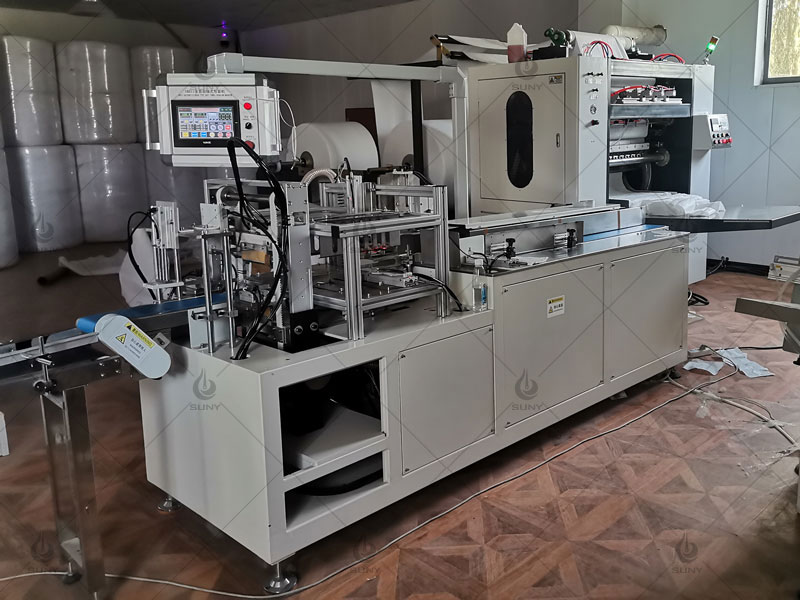
What Is a Cotton Tissue Folding and Cutting Machine
A cotton tissue folding and cutting Equipmentis an automated processing system used to fold, count, and cut cotton tissue or cotton nonwoven rolls into standardized sheets or stacks. The machine ensures consistent size, clean edges, and uniform folding, making it ideal for mass production of cotton tissues.
Compared with manual processing, this machine significantly improves efficiency, reduces labor costs, and enhances product consistency. It is widely used in the production of facial cotton tissues, cosmetic wipes, medical cotton sheets, and personal care products.
Main Features of a Cotton Tissue Folding and Cutting Equipment
Modern cotton tissue folding and cutting machines are engineered for precision, stability, and productivity. Key features include:
-
High-precision folding system
Ensures uniform folds with accurate alignment for a professional appearance. -
Automatic cutting mechanism
Sharp blades provide clean and smooth cutting without fraying the cotton fibers. -
Adjustable size settings
Folding length, cutting width, and sheet quantity can be customized. -
Stable material feeding system
Maintains continuous and smooth feeding to avoid wrinkles or misalignment. -
User-friendly control system
Touchscreen or PLC control allows easy operation and quick parameter adjustments. -
Low maintenance design
Durable components reduce downtime and operating costs.
These features make the machine suitable for both small-scale workshops and industrial production lines.
Differences Between Cotton Tissue Machines and Conventional Tissue Machines
Although cotton tissue machines and traditional paper tissue machines may appear similar, they differ significantly in application and performance:
-
Material compatibility
Cotton tissue machines are designed specifically for soft, flexible cotton or nonwoven materials, while conventional machines focus on paper tissue. -
Cutting precision
Cotton fibers require cleaner cuts to avoid lint and loose edges. -
Product quality standards
Cotton tissue products often target premium, cosmetic, or medical markets with higher quality requirements. -
Process stability
Cotton tissue machines use optimized tension control to handle delicate materials.
Working Principle and Operating Process
The cotton tissue folding and cutting machine operates through a streamlined and automated workflow:
-
Material loading
Cotton tissue rolls are mounted on the feeding unit. -
Tension control and feeding
The material is smoothly fed into the folding section under controlled tension. -
Folding process
The tissue is folded longitudinally and transversely according to preset parameters. -
Length measurement
Sensors accurately measure sheet length before cutting. -
Cutting and separation
The folded tissue is cut into uniform pieces. -
Stacking and output
Finished cotton tissues are neatly stacked or conveyed to packaging.
This process ensures consistent output with minimal manual intervention.
Final Cotton Tissue Product Characteristics
The finished products produced by a cotton tissue folding and cutting machine have several key characteristics:
-
Soft and skin-friendly texture
-
Uniform size and clean edges
-
Lint-free and hygienic quality
-
High absorbency and strength
-
Premium appearance suitable for branded packaging
These qualities make cotton tissue products highly competitive in the personal care and medical markets.
Applications and Market Advantages
Cotton tissue folding and cutting machines are widely used in:
-
Facial cotton tissue production
-
Cosmetic and makeup removal pads
-
Baby care and hygiene products
-
Medical and healthcare disposables
-
Hotel and travel hygiene supplies
Cotton tissue folding and cutting equipment is an essential solution for manufacturers seeking high efficiency, stable quality, and premium output in cotton tissue production. With precise folding, accurate cutting, and flexible customization, this machine supports growing market demand for high-quality cotton tissue products while ensuring cost-effective and scalable manufacturing.
Previous Page:Next Page:Quick consultation
Zhengzhou SUNY Industrial Co., Ltd. , a SUNY Group subsidiary, specializes in manufacturing sanitary equipment including wet wipes machines, mask machines and diaper production lines. Headquartered in Zhengzhou, it integrates R&D, production and sales with China's leading sanitary automation expertise.ProductsCopyright: 2011-2025 Zhengzhou SUNY Industrial Co., Ltd. All rights reserved. -